Is Chengdu worth visiting? Before you book your flight, figure out what you actually want to get out of it.
If it's your first time in China, Chengdu is likely to show up in your travel plans.
But I want to give you an answer that might not match most of what you read online:
Chengdu is worth visiting, but it's not a city that's worth flying to specially for everyone.
If it's your first time in China and you only have about a week, I wouldn't just flat-out tell you "Chengdu is a must."
Because there are plenty of cities in China with a very clear reason to visit.
Want to see the most iconic ancient civilization in China? Beijing and Xi'an. Want the Great Wall and the Forbidden City? Beijing. The Terracotta Warriors? Xi'an. The most spectacular landscapes in China? Zhangjiajie and Guilin.
Chengdu is a bit different.
What's most interesting about Chengdu isn't any one grand building or a mountain that's a "must-see in this lifetime." It's more of a combination:
Pandas, food, teahouses, city life, and the possibility of heading out from here into western Sichuan.
So instead of asking "What fun things are there to do in Chengdu?" maybe first ask yourself:
Is Chengdu right for you?
If it's your first time in China, Chengdu might not be your first stop.
Say you only have ten days, and it's your first trip to China.
You'd probably prioritize: Beijing → Xi'an → Shanghai or Beijing → Xi'an → Chengdu. Some people also pick Beijing → Guilin → Zhangjiajie.
That's totally normal.
Because for a foreigner visiting China for the first time, Beijing and Xi'an feel "Chinese" in a very direct way. The Forbidden City, the Great Wall, the Terracotta Warriors—these things don't even need an explanation. You see them in a photo and you just know why they're worth going.
Beijing represents the capital of imperial China. Xi'an represents one of the most important capitals of ancient China.
But Chengdu doesn't have a world-class cultural heritage site on the same level as the Forbidden City, the Great Wall, or the Terracotta Warriors—the kind that can single-handedly carry a city's tourism image.
That's why I don't really agree with that whole online refrain:
"If it's your first time in China, you absolutely can't miss Chengdu."
It's not that clear-cut.
If your China trip is only seven to ten days and you really want to learn about Chinese history, then Beijing and Xi'an probably deserve to come before Chengdu.
So what exactly makes Chengdu worth coming for?
The answer is actually pretty simple.
Pandas.
That's the most direct reason.
Chengdu's Giant Panda Breeding Research Base is where many international visitors first really encounter China's giant pandas. And it's not like 'seeing a panda' in a zoo. When you see a whole area full of pandas, especially the young ones, the experience is completely different from looking at photos online.
If you're a panda lover yourself, then this doesn't even need further discussion. You should come to Chengdu. Because for you, Chengdu has one very clear reason.
But if you have absolutely no interest in pandas? Then Chengdu's appeal to you drops significantly. This is also what I think many travel articles don't make clear.
Sichuan food, maybe more than the sights, is what will make Chengdu stick in your mind.
Chengdu also has something that's hard to replicate: the food.
Hot pot, skewers, wontons, sweet water noodles, maocai, bobo chicken...
But once you actually come to Chengdu, you'll find that Sichuan food isn't just 'spicy.' The numbing from Sichuan peppercorns, the aroma and heat from chili peppers, and the way various seasonings combine—that's what makes Sichuan food truly interesting.
Of course, if you can't handle spicy food at all, then that point doesn't apply. But if you like exploring local food, Chengdu really is a city that's very easy to enjoy. And it doesn't require you to go to fancy restaurants. A lot of the time, an unassuming little shop is more interesting.
This is also where Chengdu differs from some traditional tourist cities: you don't have to keep 'visiting sights' the whole time. Eating itself is part of the trip.
What really makes me recommend Chengdu is 'doing nothing.'
This might be even harder to explain than pandas.
Chengdu's slowness isn't put on for tourists; it's built into the city's daily life.
I lived in Beijing for a few years, so I feel this contrast especially deeply. It's not that Beijing has nothing to do—Summer Palace, Great Wall, Fragrant Hills, there are too many famous sights to count. But if you don't want to race through sights on a weekend and just want to casually step out and unwind, it's not that easy. In the city, looking around, it's mostly glass-curtained high-rises; the riverbanks are tidy man-made channels. There's rarely a meadow where you can sit for half a day. To camp or fish, you have to drive an hour or two out to the far suburbs. A lot of weekends end up either stuck in traffic on the way to a sight, or just holed up at home.
Chengdu is different. As long as the weather is decent, weekend life is all about spreading out and taking it easy. There's a 100-kilometer greenway around the city—you can ride all day and never see the same stretch twice. In the near suburbs, you can just pick any creek and go fishing. Unassuming little parks along the street—you can row a boat, pitch a tent on the grass. Getting some friends together and spending an afternoon at a teahouse is the most ordinary pastime you can imagine.
No tickets required. No time slots to squeeze into. You don't even need to plan ahead.
Stop by some small place on the way in the morning, have hotpot for lunch, find a teahouse in the afternoon, and then do nothing at all. Watch the locals play cards, chat, drink tea, and soak up the sun. Someone nearby is getting their ears cleaned; someone else has been sitting there for three or four hours without any urge to leave. No one hurries you. No one thinks you're wasting your time.
If you're used to fast, high-efficiency travel — days packed with sights from morning to night — this pace might even feel a little boring.
But if, when you travel, you don't want every day to be scheduled from 8 a.m.,
"9:00 Sight A → 10:30 Sight B → 12:00 check in at C → 14:00 Sight D"
then Chengdu might be perfect for you.
Sometimes, the most comfortable way to travel Chengdu is to plan a little less.
But Chengdu also has a problem that's easy to overlook.
A lot of Chengdu's "internet-famous" spots aren't as special as they look in online photos.
Kuanzhai Alley is a textbook example. So is Jinli.
The first time you see the gray brick, the red lanterns, the mock-antique buildings, it might feel very Chinese. But once you go inside, what you find is: restaurants, souvenir shops, snack stalls, and tourists. And then you start searching through the crowd for the so-called "old Chengdu."
That's often when the disappointment creeps in. Because these places are more tourist commercial streets than the everyday life of ordinary Chengdu people.
So if you came to Chengdu just to:
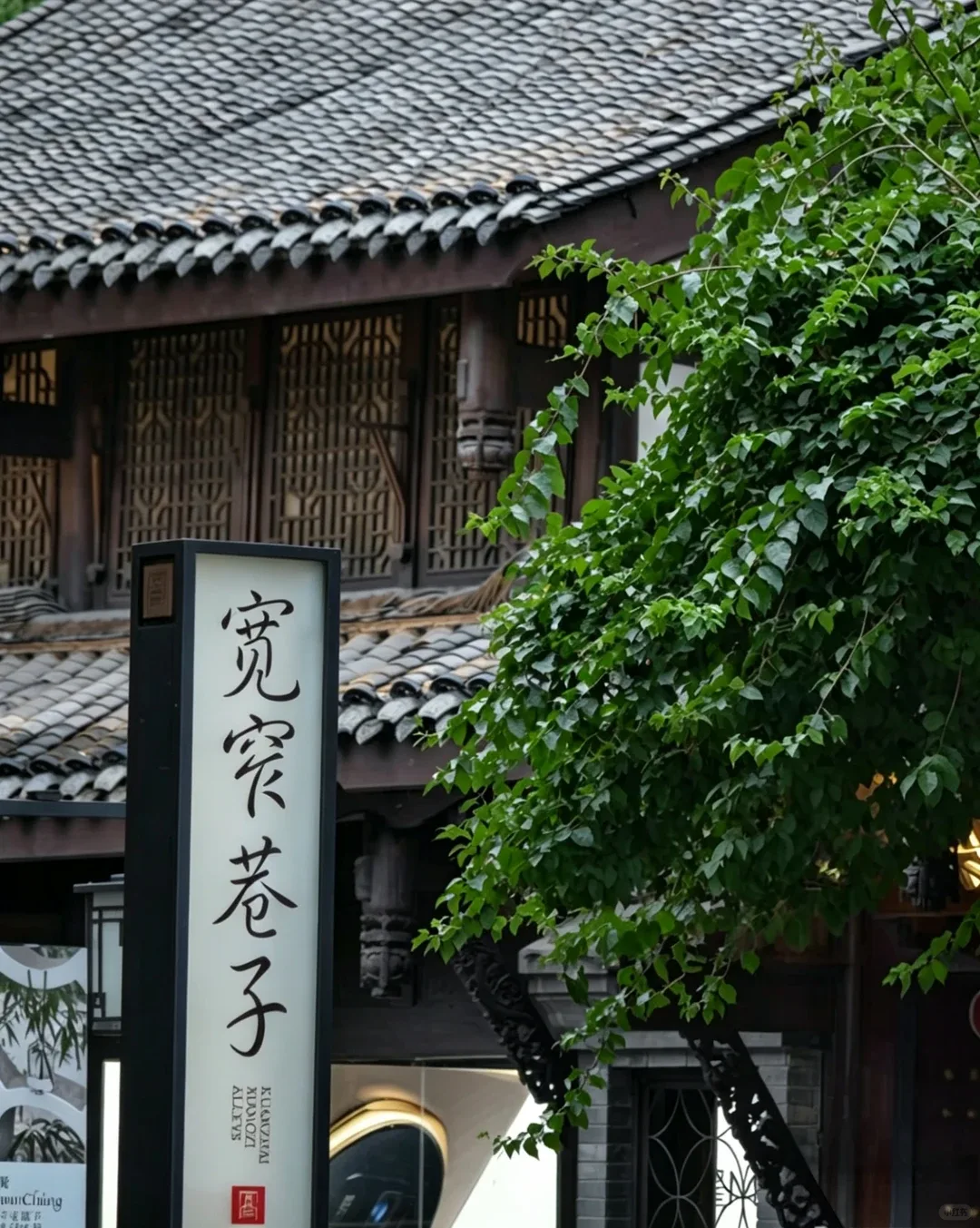

Kuanzhai Alley, Jinli, Chunxi Road, Taikoo Li
Then you take your photos and head back to the hotel — and I don't think you've really experienced Chengdu.
And Chengdu's culture isn't as "mind-blowing" as you imagined, either.
Wuhou Shrine is very much worth a visit. The Jinsha Site is too. And so is Du Fu's Thatched Cottage.
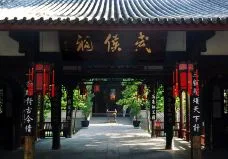
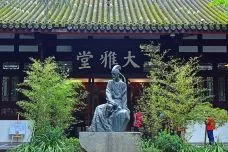
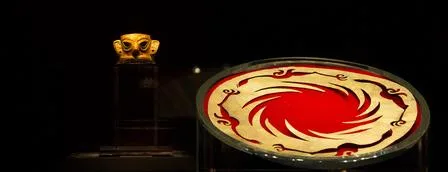
But I won't tell you:
“After visiting these sights, you'll be awed by thousands of years of Chinese civilization.”
Not necessarily.
If you're not interested in the Three Kingdoms, the ancient Shu civilization, or Chinese history in the first place, then a lot of museums, ruins, and old buildings might just look like: buildings, artifacts, and labels.
It's not that the places are bad. It's that travel interests differ.
If you really want the grand narrative of Chinese history: Beijing and Xi'an are more direct.
Beijing's Forbidden City, the Great Wall, and its many historic buildings are themselves part of Chinese history. Xi'an's Terracotta Army, ancient city wall, and Giant Wild Goose Pagoda, along with Tang dynasty history, make it easier for first-time visitors to China to get a direct sense of ancient Chinese civilization.
So: don't come to Chengdu just because “Chengdu has a long history.” If history is the most important reason you're coming to China, Beijing and Xi'an might suit you better.
What Chengdu is really great at is taking you beyond Chengdu.
That might actually be what I most wanted to tell you.
Chengdu is more than just Chengdu.
If you're already in southwest China, then Chengdu is actually a really convenient travel base.
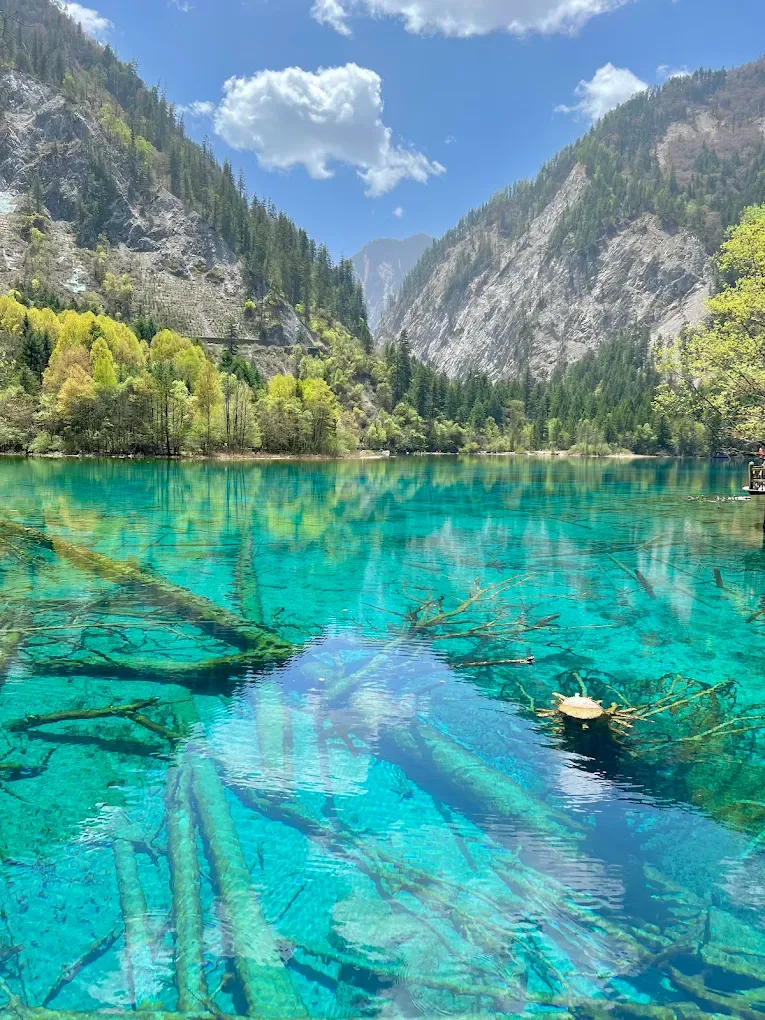
From here, you can keep going to: Jiuzhaigou to see plateau lakes, forests, and snow-capped mountains.
Mount Siguniang to step into scenery closer to the western Sichuan plateau.
Then keep heading west, deeper into Sichuan. Kangding, Daocheng, Litang, Xinduqiao...
You'll slowly enter a world completely different from the Chengdu Plain. Cities disappear. The elevation starts to climb. Tibetan culture becomes increasingly visible. Monasteries, grasslands, snow mountains, yaks, prayer flags, and a completely different geography.
If your travel goal is:
"I want to see what western China is really like."
Then Chengdu is a completely different story.
Chengdu is more of a "gateway" than a final destination.
That's also why I think: Chengdu is a great fit for a western China travel route.
For example:
Route 1: First time in China
Beijing → Xi'an → Chengdu
This route works well for getting to know China for the first time. Beijing shows you the imperial capital. Xi'an shows you ancient China. Chengdu starts you off on a completely different side of Sichuan life.
Route 2: Natural scenery
Chengdu → Jiuzhaigou → Chengdu
If you're more into natural scenery, this route makes a lot of sense. You don't waste huge chunks of time shuttling between cities.
Route 3: If you really want to get into western Sichuan
Chengdu → Siguniang Mountain → Kangding → Xinduqiao → Daocheng
This isn't "visiting Chengdu" in the usual sense anymore. It's a proper journey into the highlands of western Sichuan. If you love mountains, photography, road trips and Tibetan culture, this could be way more enjoyable than spending two extra days in Chengdu city.
So Chengdu is different from Zhangjiajie and Guilin too.
If you tell me:
"I only have two weeks, and I just want to see China's most beautiful natural scenery."
Then I probably wouldn't put Chengdu at the top of the list.
Zhangjiajie has its strengths. Guilin and Yangshuo have theirs.
These places have a very straightforward selling point: Mountains are mountains, rivers are rivers—the scenery is the whole point of the trip.
Chengdu is different. Its strengths are: city life + food + pandas + Sichuan culture + a gateway to the west.
So don't compare Chengdu and Zhangjiajie on "which has prettier scenery." They're not even the same kind of trip.
So who's the best fit for Chengdu?
If two or three of the things below grab your interest, I'd say it's worth coming.
🐼 You genuinely love pandas
Not "since I'm in China anyway, might as well take a look." More like when you see a panda, you think:
"This trip was worth it."


Then Chengdu is a good fit for you.

You love exploring food,
especially if you're willing to try spicy Sichuan dishes and all sorts of street snacks. Chengdu will very likely become one of your favorite cities to eat in across China.
You like to slow down.
If travel isn't about ticking off a checklist for you, but about finding a place to sit, observe local life, and take it in, then Chengdu deserves more time.
🏔️ You want to go to western/north Sichuan.
This one is very important. If you already plan to go to Jiuzhaigou, Siguniang Mountain, or explore the western Sichuan plateau further, then Chengdu is almost naturally your starting point. I traveled to quite a few places in western Sichuan long ago, and even this May I went to a lesser-known spot there, Dawagengzha and Shenmulei — it was really rewarding.
If you're planning to head into western Sichuan, altitude is something you should actually think about before you go. I wrote a separate guide comparing the altitude risks at Jiuzhaigou, Huanglong, Mount Siguniang, and Daocheng Yading.
🇨🇳 You've already seen Beijing and Xi'an.
If you've already experienced China's most classic historical cities, Chengdu offers a different kind of China. Not palaces and city walls. Rather: food, tea, pandas, street life, and the mountains out west.
Who might not like Chengdu that much?
If you want travel to be very efficient, very tidy, and very easy to communicate in, Chengdu may take some getting used to.
English isn't common in ordinary restaurants and small shops. China's mobile payment system also needs some preparation for foreign tourists. Popular sights have crowds. Popular restaurants have lines. Summer can be hot and humid. Winter can be cold and damp. And some famous tourist streets will feel over-commercialized.
All this is true.
But I don't think these things mean "Chengdu is bad." They just show: Chengdu is not a tourist city fully designed around foreign visitors' habits. You need to adapt a little.
So how many days should you actually spend in Chengdu?
If it's just Chengdu itself: around 3 days is enough to get a first feel for the city.
One day for the panda base. One day for the city and history. One day for eating, teahouses, and free time.
There's no need to cram in extra sights just to make it a "5-day Chengdu trip."
If your goal is: Chengdu + Jiuzhaigou, then you can stretch the time out quite a bit.
If it's: Chengdu + Western Sichuan, then Chengdu is barely even the starting point of the whole trip.
At that point, the question you should really be asking isn't:
"How many days is Chengdu worth?" but rather: "How far am I planning to go from Chengdu?"
So, is Chengdu worth flying all the way here for?
My answer is: worth it, conditionally.
If it's your first time in China and you only have a short window, I wouldn't say Chengdu is necessarily more worth it than Beijing or Xi'an.
If you want to see China's classic history and culture: Beijing and Xi'an come first.
If you want to see China's most famous natural scenery: Zhangjiajie and Guilin deserve priority.
But if what you want to experience is: pandas + Sichuan food + the slow life in a Chinese city + highland travel in the west
Then Chengdu becomes very attractive.
Especially once you've put Jiuzhaigou, Mount Siguniang, Western Sichuan, or even farther parts of western Sichuan into your plan. At that point, Chengdu is no longer just a travel destination. It's your gateway to Sichuan and to western China.
Finally, here's a simple way to decide
If seeing pandas gets you excited.
If seeing hotpot and Sichuan food makes you want to try them.
If you're willing to sit in a teahouse and waste half a day.
And at the same time, you want to go to Jiuzhaigou and Mount Siguniang, see snow mountains, plateaus, and Tibetan culture.
Then I think:
Chengdu is absolutely worth coming to.
But if what you really want is China's historical calling cards like the Forbidden City, the Great Wall, and the Terracotta Warriors, or world-class natural scenery like Zhangjiajie and Guilin,
Then Chengdu doesn't necessarily have to be your first choice.


Chengdu isn't a "must-visit city in China." It's more like:
A city you might not expect much from at first, but one that slowly grows on you once you're there.
And for those planning to push on to western Sichuan — Chengdu isn't even the end. It's just the beginning.