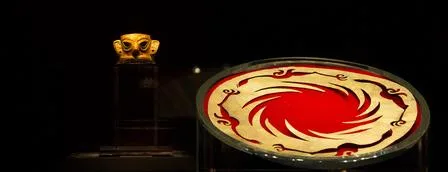
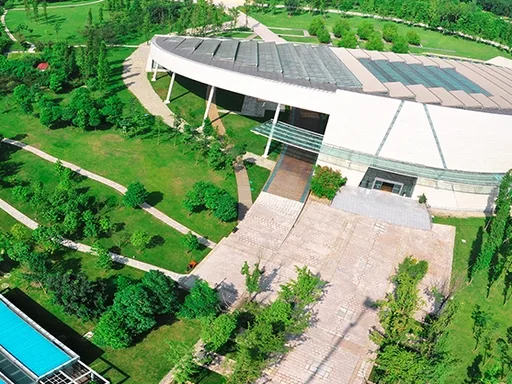
An archaeological museum built on the original site of the Jinsha Site, a major discovery of the ancient Shu civilization. It is a national first-class museum, renowned for artifacts such as the "Sun Bird" gold ornament. Note: Closed for renovation from December 2025 to April 2027.
The birthplace of the Sun Bird gold ornament, the most tangible site of the ancient Shu civilization, and a complement to Sanxingdui.
As a vital witness to ancient Shu civilization, the Jinsha Site Museum's displays and the archaeological site itself are immensely impressive, making it a must-see cultural landmark in Chengdu. But since it's closed for renovation, it's not possible to visit—check the opening schedule before you go.
Tickets & Transport
Tickets
- Adult ticket
- ¥70
- Free
- No
- Reservation required
- Yes
- Real-name required
- Yes
- Ticket notes
- Real-name ticketing/reservation required; entry with ID card or ticket QR code (pre-closure policy)
Opening Hours
- Last entry
- 17:00 (last entry)
- Temporary closure
- From December 5, 2025 to April 30, 2027, the museum will undergo comprehensive renovation, and all areas will be temporarily closed to the public.
- Opening notes
- Daily 09:00-18:00 (last entry at 17:00); closed every Monday (except statutory holidays and Jan, Feb, Jul, Aug); currently closed for renovation.
Best Time to Visit
- Best time of day
- Morning opening hours, when there are relatively fewer visitors and the light is suitable for photographing artifacts.
- Best day of week
- Weekdays
- Best season
- Suitable all year round after reopening
- Avoid times
- Weekend and holiday afternoons, at peak crowd times
- Avoid days
- Mondays (closed; may open on statutory holidays)
- Crowd level
- High
- Crowd peak time
- 10:00-15:00 on weekends and holidays
Getting There
- Metro station
- Jinsha Site Museum Station (Metro Line 7, Exit C leads directly to the South Gate/Visitor Center)
- Metro line
- Line 7
- Metro exit
- Exit C
- Metro distance
- 300m
- Metro walk
- 5min
In Detail
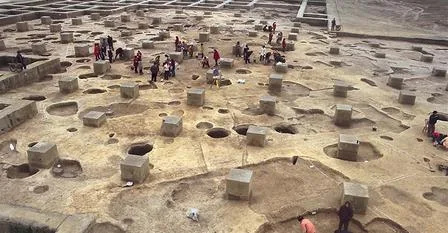
The Jinsha Site is one of China's most important archaeological discoveries of the early 21st century, yielding thousands of gold, jade, and bronze artifacts. The Relics Hall preserves the original excavation site of the sacrificial area, while the Sun Bird gold ornament in the Exhibition Hall is the icon of China's cultural heritage.
What to expect
Visitors can see the original large sacrificial pits in the Relics Hall, admire precious artifacts including gold and jade objects and bronzes represented by the Sun Bird gold ornament in the Exhibition Hall, and take a stroll through the scenic grounds among the ebony forest.
How to visit
Allow half a day: visit the Relics Hall first, then the Exhibition Hall, and end with a walk around the grounds. Take Metro Line 7 or a bus to get there. It works well in combination with Du Fu Thatched Cottage and Qingyang Palace.
Pros
National-treasure artifacts and core representation of the ancient Shu civilization
Original site display with a strong sense of presence
Pleasant grounds with distinctive architecture
Cons
Closed for renovation from December 2025
Crowded during peak season
A bit far from the city center
Highlights
- Sun Bird gold ornament: icon of China's cultural heritage with exquisite craftsmanship
- Relics Hall: original excavation site of the sacrificial area with an astonishing pile of ivory
- Ebony Forest: spectacular cluster of large ebony trees on the grounds
- Cultural relic restoration display: get a close-up look at the conservation process
- Special Exhibition on Ancient Shu Civilization: A systematic look at the relationship between Jinsha and Sanxingdui.
FAQ
When will the Jinsha Site Museum be closed?
Closed for renovation from December 2025 to April 2027; temporarily closed to the public.
Is the Sun Bird gold ornament the museum's most treasured exhibit?
Yes, the Sun Bird gold ornament is the most precious artifact unearthed at the Jinsha Site and is also the symbol of China's cultural heritage.
What is the relationship between the Jinsha Site and Sanxingdui?
The Jinsha Site is considered to be the continuation and center of the ancient Shu civilization on the Chengdu Plain after the decline of the Sanxingdui civilization.
Field Tips
Best photo spot
1. Relics Hall Sacrificial Pit: Massive ivory deposits and excavation grids—a striking archaeological scene.
2. Sunbird Gold Foil Display Case: Close-up of the national treasure; beware of light reflections.
3. Ebony Forest: Massive ebony logs, great for portrait photography.
4. Exhibition Hall Entrance Lobby: Architectural lines combined with light and shadow.
5. Park lawn and building facades: Modern architecture blending with nature.
Best entrance South Gate (main entrance on Jinsha Site Road)
Best exit South Gate (main exit on Jinsha Site Road)
Location & Nearby
Nearby attractions
- Du Fu Thatched Cottage Museum (2.8 km)
- Sichuan Yiyuan Garden Art Museum (4 km)
- Kuanzhai Alley (4.7 km)
- Happy Valley Chengdu (4.8 km)
- Wuhou Shrine Museum (5.3 km)