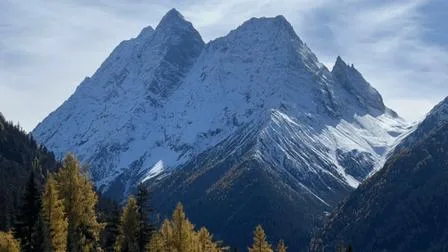
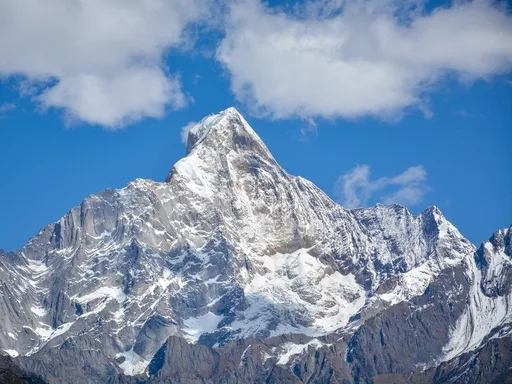
Mount Siguniang is the highest peak of the Qionglai Mountains, composed of four connected snow peaks, and is known as the 'Alps of the East'.
Mount Siguniang is one of Sichuan's most magnificent snow mountain groups, integrating snow mountains, forests, lakes, and meadows, making it a must-visit for outdoor enthusiasts and photographers.
Siguniang Mountain is the essence of Sichuan's natural beauty, with snow-capped peaks, forests, and lakes complementing each other. Although the journey is long and the altitude is high, the magnificent scenery is absolutely worth a visit.
Tickets & Transport
Tickets
- Adult ticket
- ¥150
- Child ticket
- ¥75
- Free
- No
- Ticket methods
- Tickets can be purchased via the official scenic area website, WeChat official account, or on-site.
- Ticket notes
- Peak season (April 1 to November 30): ¥150 admission. Off-season (December 1 to March 31 of the following year): ¥50. The Shuangqiao Valley sightseeing bus costs an additional ¥70.
Opening Hours
- Last entry
- 16:00
- Ticket sales end
- 15:30
- Holiday hours
- Opening hours may be extended during holidays; please refer to the official announcements of the scenic area.
- Seasonal hours
- In winter (December to March of the following year), opening hours may be shortened due to heavy snow. Please pay attention to scenic area notices.
- Temporary closure
- In case of extreme weather or geological disasters, the scenic area may close temporarily. Please watch for official information.
- Opening notes
- Opening hours may vary by season. We recommend checking the latest announcements before your visit.
Best Time to Visit
- Best time of day
- Early morning and evening, when the light is soft, snow-capped mountains are clearly visible, and there are fewer visitors.
- Best day of week
- Weekdays
- Best season
- June to October
- Avoid times
- National Day and other public holidays
- Avoid days
- Weekends
- Crowd level
- High
- Crowd peak time
- 10:00-14:00
Getting There
In Detail
Mount Siguniang is located in Xiaojin County, Aba Tibetan and Qiang Autonomous Prefecture, Sichuan Province. It is the highest peak of the Qionglai Mountains, consisting of four peaks from north to south: Dagu (Big Sister) Peak, Ergu (Second Sister) Peak, Sangu (Third Sister) Peak, and Yaomei (Youngest Sister) Peak. Yaomei Peak, at 6,250 meters above sea level, is the second highest peak in Sichuan, covered with snow year-round, with steep and majestic slopes. The scenic area features soaring snow mountains, dense primitive forests, crystal-clear alpine lakes, and vast meadows. The scenery changes with the seasons: blooming mountain flowers in spring, lush green grasslands in summer, colorful forests in autumn, and pure white snow in winter. It is known as the 'Alps of the East'.
The scenic area is mainly divided into three valleys: Shuangqiao Valley, Changping Valley, and Haizi Valley. Shuangqiao Valley is the most developed, with sightseeing buses reaching the valley floor directly; along the way, snow mountains, forests, meadows, and streams complement each other. Changping Valley is famous for its primitive ecology and ancient cypress plank paths, and is a popular route for hiking and horse riding. Haizi Valley retains a more primitive landscape, with high-altitude lakes scattered like stars, making it a paradise for mountaineers and explorers.
Mount Siguniang is not only a paradise of natural beauty but also a heartland of Tibetan culture. Local Tibetans have lived here for generations, preserving rich folk customs and religious traditions. While enjoying the snow mountain scenery, visitors can also experience the strong Tibetan atmosphere. The scenic area has a high altitude and changeable weather, so travelers should be mindful of altitude sickness and keep warm.
What to expect
Visitors can take sightseeing buses or hike through the three valleys to admire the spectacular views of the four snow peaks and experience the natural beauty of alpine meadows, primitive forests, and high-altitude lakes. You can also experience Tibetan culture and taste special foods such as butter tea and yak meat, but be prepared for the high altitude.
How to visit
It is recommended to arrive in Chengdu first, then take a bus from Chadianzi Bus Station to Xiaojin County, about 4-5 hours, and then transfer to local transport to Rilong Town (the scenic area entrance). Inside the scenic area, you can take sightseeing buses or choose hiking or horse riding.
Pros
1. Magnificent snow mountain scenery, beautiful in all seasons.
2. Three valleys meet different needs, offering both easy sightseeing and in-depth hiking.
3. Rich Tibetan cultural atmosphere.
4. Fresh air, great for getting close to nature.
Cons
1. High altitude can easily cause altitude sickness.
2. Far from Chengdu, long travel time.
3. Changeable climate, strongly affected by weather.
4. Crowded in peak season, limited accommodation.
Highlights
- Yaomei Peak: At 6,250 meters, snow-capped year-round, it is the main and highest peak of Mount Siguniang. With its steep shape, it is the ultimate goal for mountaineers.
- Shuangqiao Valley: The most developed valley in the scenic area, directly accessible by sightseeing bus. Snow mountains, forests, meadows, and streams interweave, perfect for a relaxed visit.
- Changping Valley: Primitive forests and ancient cypress plank trails. Hike or ride horses deep into the valley to experience the awe of being close to the snow mountains.
- Haizi Valley: Home to numerous alpine lakes, such as Dahaizi (Big Lake) and Huahaizi (Flower Lake). The crystal-clear waters reflect the snow mountains, making it a hidden gem for photography and hiking.
- Tibetan Culture: Tibetan villages around the scenic area offer opportunities to experience local Tibetan culture and special foods.
FAQ
What is the best season to visit Mount Siguniang?
The best season is from June to October, when the weather is relatively stable, mountain flowers bloom, meadows are lush green, and the scenery is at its finest. Winter snowscapes are magnificent, but temperatures are low and some sections may be closed.
How can I prevent altitude sickness?
Take Rhodiola rosea 1-2 days in advance. Avoid strenuous exercise after arrival, drink plenty of water, keep warm, and do not drink alcohol. If you experience severe headache, vomiting, or other symptoms, descend promptly or use supplemental oxygen.
Can I stay overnight inside the scenic area?
There are a few Tibetan guesthouses or campsites in the scenic area, such as in Changping Valley and Haizi Valley, but the facilities are basic. It is recommended to stay in Rilong Town, where there are more hotels and guesthouses, making it convenient to enter the valleys the next day.
Field Tips
Best photo spot 1. Maobi Liang (Cat Nose Ridge) viewpoint: Best spot for panoramic views of Siguniang Mountain; catch the golden sunrise on the peaks. 2. Penjing Beach in Shuangqiao Valley: Snow mountains reflect in clear streams, ideal for reflection shots. 3. Dead Tree Beach in Changping Valley: Withered trees set against snowy peaks, full of stark beauty. 4. Dahai Lake in Haizi Valley: High-altitude lake reflecting snow mountains, a classic photo spot.
Best entrance Main entrance (Siguniang Mountain Visitor Center)
Best exit Main entrance
Location & Nearby
Nearby attractions
- Xiahe Stream Scenic Area (52.5 km)
- Xiling Snow Mountain Scenic Area (58.2 km)
- Tianfu Huaxi Valley (66.8 km)
- Mount Qingcheng & Dujiangyan (67.5 km)
- Guanxian Ancient City Scenic Area (69.1 km)