World Cultural Heritage, national 5A scenic area. "Worship the water at Dujiangyan, seek the Tao at Mount Qingcheng" -- Dujiangyan is a miracle of ancient damless water diversion engineering; Mount Qingcheng is one of the birthplaces of Taoism (front mountain: Taoist temples, back mountain: natural scenery). The three scenic areas sell separate tickets.
Chengdu's most heavyweight World Heritage site. In one day you can see the millennium-old water conservancy miracle and the Taoist sacred mountain--a must on any Chengdu itinerary.
Dujiangyan is a must-see hydraulic miracle; standing at the Fish Mouth water-divergence point makes you marvel at the wisdom of the ancients. Mount Qingcheng suits those who love tranquility and Taoist culture. Combined as a World Heritage site, it is well worth a special trip, but it is recommended to avoid holiday peak periods.
Tickets & Transport
Tickets
- Adult ticket
- ¥80
- Child ticket
- ¥40
- Free
- No
- Reservation required
- Yes
- Ticket methods
- Tickets can be purchased through the official WeChat official account "Qingcheng Mountain Dujiangyan" or at the scenic area entrance. It is recommended to buy tickets online in advance; during holidays, reservation by time slot is required.
- Ticket notes
- Dujiangyan Scenic Area ¥80, Qingcheng Mountain Front Mountain ¥90, Qingcheng Back Mountain ¥20; the three are sold separately. During peak season and holidays, real-name reservation is required on the official WeChat account "Qingcheng Mountain Dujiangyan".
Opening Hours
- Last entry
- Dujiangyan ticket sales stop at 17:30 in peak season and 16:30 in off-peak season; Qingcheng Mountain Front Mountain stops selling tickets around 16:00-16:30.
- Ticket sales end
- 16:30
- Holiday hours
- Opening hours may be extended during holidays and peak season (April–October); please pay attention to official announcements.
- Seasonal hours
- In winter (November–March), the scenic area may close as early as 17:00; please refer to the scenic area's official notice for details.
- Opening notes
- Dujiangyan: approximately 08:00–18:00 in peak season and 08:30–17:00 in off-peak season; Qingcheng Mountain Front Mountain: 08:00–17:00 in peak season (Mar 2–Nov 30) and 08:00–18:00 in off-peak season (Dec 1–Mar 1).
Best Time to Visit
- Best time of day
- Early morning (08:00–10:00) has fewer visitors and soft light, ideal for photos; in the late afternoon (after 16:00) crowds thin out, and you can enjoy the river view and sunset.
- Best day of week
- Weekdays (Tuesday to Thursday) are relatively less crowded; weekends and holidays are very crowded.
- Best season
- April-June and September-November (pleasant climate); the back of Mount Qingcheng is a summer retreat.
- Avoid times
- Statutory holidays (Labor Day, National Day, Spring Festival) have the most crowded period from 10:00-15:00; it is recommended to avoid this time.
- Avoid days
- Statutory holidays such as Labor Day, National Day, and Spring Festival, as well as weekend mornings.
- Crowd level
- Very High
- Crowd peak time
- On holidays and weekends from 10:00-15:00, the Anlan Suspension Bridge and Fish Mouth viewing platform are the most crowded.
Getting There
- Metro station
- Xipu Station
- Metro line
- Line 2
- Metro exit
- Exit A (transfer to intercity train)
- Metro distance
- 1.5km
- Metro walk
- 20min
In Detail
Dujiangyan is a damless water diversion project built over 2,200 years ago under the leadership of Li Bing and his son. The three major components--Fish Mouth, Flying Sand Weir, and Bottle Neck--still supply water to the Chengdu Plain today, making it a living fossil of world water conservancy engineering. Mount Qingcheng is the birthplace of Taoism. The front mountain is dotted with Taoist temples and surrounded by quiet forests, while the back mountain features gorges, waterfalls, and wild natural charm.
What to expect
At Dujiangyan, you'll see firsthand the ancient hydraulic wisdom of the Fish Mouth dividing the Min River into inner and outer rivers, the Flying Sand Weir automatically releasing sediment, and the Bottle Neck controlling flow. You can cross the Anlan Suspension Bridge and climb Qinyan Tower for a panoramic view. At Mount Qingcheng, hike up the stone steps on the front mountain, weaving between Taoist temples and ancient trees to feel the quiet Taoist atmosphere; on the back mountain, trek along streamside plank roads and enjoy waterfalls and canyon scenery. The scenic areas are crowded, especially during holidays, so be prepared for queues and walking.
How to visit
It's recommended to plan a 1-2 day itinerary: On day one, visit Dujiangyan Scenic Area along the route Fish Mouth - Flying Sand Weir - Bottle Neck - Erwang Temple - Anlan Suspension Bridge, about 3-4 hours. On day two, head to Mount Qingcheng; the front mountain takes about half a day to hike, while the back mountain needs a full day. From downtown Chengdu, take Metro Line 2 to Xipu Station, transfer to the intercity train (about 30 minutes) to Qingchengshan Station or Dujiangyan Station, then take a bus or taxi to each scenic area. You can also choose a one-day group tour or self-drive (about 1 hour drive).
Pros
A UNESCO World Heritage Site with both historical and natural value; the Dujiangyan irrigation system is awe-inspiring and great for family learning; Mount Qingcheng is serene and cool, rich in Taoist culture; easily accessible as a day trip from Chengdu.
Cons
The scenic area is large with scattered sights, requiring multiple transfers; extremely crowded on holidays with long queues; the hike on the back mountain of Mount Qingcheng is strenuous and physically demanding; tickets are relatively expensive, and Dujiangyan and Mount Qingcheng are ticketed separately.
Highlights
- The three major structures of Dujiangyan: Yuzui (Fish Mouth), Feishayan (Flying Sand Weir), and Baopingkou (Bottleneck Channel) — a living fossil of ancient water conservancy engineering.
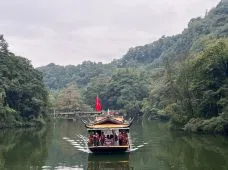
- Anlan Suspension Bridge: spanning the inner and outer Min River, it offers a bird's-eye view of the amazing Fish Mouth water-dividing project.
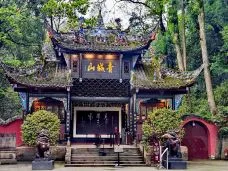
- Front Mountain Taoist temple complex on Mount Qingcheng: Tianshi Cave, Shangqing Palace, Jianfu Palace and other historic buildings.
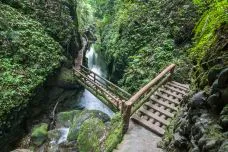
- Back Mountain natural gorge on Mount Qingcheng: waterfalls, springs, plank paths and secluded trails full of rustic charm.
- Erwang Temple and Fulong Temple: ancient buildings honoring Li Bing and his son, nestled between the mountain and the river.
FAQ
Do I need to buy separate tickets for Dujiangyan and Mount Qingcheng?
Yes, Dujiangyan scenic area and the front and back mountains of Mount Qingcheng are separately ticketed. We recommend choosing based on your time. If time is limited, Dujiangyan is the priority.
What is the difference between the front and back mountains of Mount Qingcheng?
The front mountain is dominated by Taoist temples with a gentler slope and can be done in half a day. The back mountain features natural scenery—canyon waterfalls and plank-path hiking—needing a full day and more physical strength.
What is the most convenient way to get there from downtown Chengdu?
The easiest way is to take Metro Line 2 to Xipu Station, transfer to an intercity train to Dujiangyan or Qingchengshan Station (about 30 minutes), then take a bus or taxi from the station to the scenic area. Driving takes about 1 hour.
Field Tips
Best photo spot 1. Anlan Suspension Bridge: Spanning the Min River, you can take a panoramic shot of the Fish Mouth water diversion with green mountains and clear water in the background. 2. Fish Mouth divergence: Get close to the spectacular scene of the river splitting into the inner and outer channels. 3. Qinyan Tower viewing platform: Climb the tower for a broad view of the entire Dujiangyan Scenic Area. 4. Platform in front of Erwang Temple: Ancient architecture and the Min River in the same frame, great for cultural and landscape photography. 5. Tianshi Cave on Mount Qingcheng: A Taoist temple and ancient ginkgo tree in a tranquil setting.
Best entrance Main entrance of Dujiangyan Scenic Area (Lidui Park entrance); after entering, follow the walkway to visit the three major projects in sequence.
Best exit North gate of Dujiangyan Scenic Area (near Erwang Temple); after the tour, you can take a sightseeing bus or walk back.
Scores
Trip Planner
Facilities
Accessibility
Location & Nearby
Nearby attractions
- Jiezi Ancient Town Scenic Area (10.6 km)
- Guanxian Ancient City Scenic Area (12 km)
- Yuantong Ancient Town Scenic Area (20.1 km)
- Tea Creek Valley Scenic Area (21 km)
- Zhanqi Village Scenic Area (21.3 km)