Short answer:
Jiuzhaigou is generally the easiest of the four. Huanglong is trickier because you can reach 3,500+ meters very quickly. Siguniang Mountain depends heavily on the route, while Daocheng Yading is the most demanding because of both elevation and hiking.
Just a day outside Chengdu, and you're in the unique mountain scenery of western and northern Sichuan. That's one of the reasons I think Chengdu is more than just a city stop—it's also a gateway to some of Sichuan's best mountain destinations.Jiuzhaigou, Huanglong, Siguniangshan, and Daocheng Yading are all popular destinations — in my opinion, the most worthwhile places around Chengdu. They're high-altitude, and a lot of people worry: just how bad is altitude sickness up there, really?
My own experience — I've been to both western and northern Sichuan.
Places I've actually been to: Jiuzhaigou · Huanglong (northern Sichuan) · Siguniangshan (Shuangqiao Valley) · Dawagengzha (right next to Siguniangshan) (western Sichuan),Siguniangshan (Changping Valley / Haizi Valley)
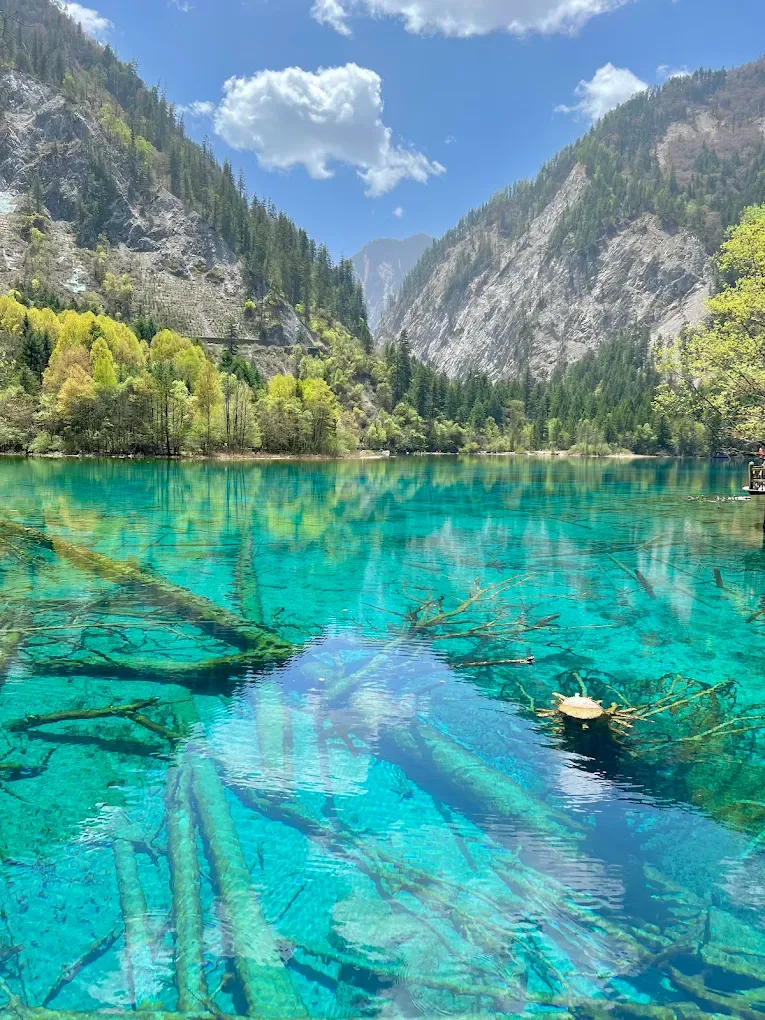
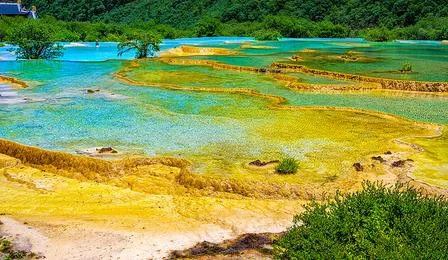
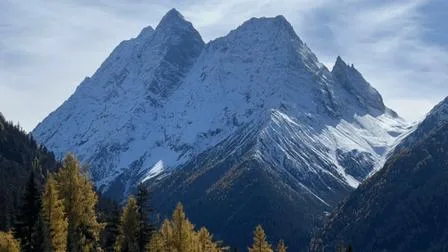
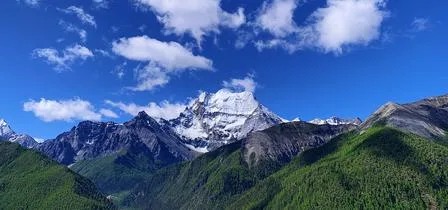
Places I haven't been to: Daocheng Yading. The data for those comes from public sources, listed at the end.
Altitude isn't the whole story.
The altitude number itself doesn't lie, but it's incomplete. This article isn't about what happened on one particular trip — I've already written one of those (Dawagengzha field report) at 3900M altitude.
This post is about: when you're choosing between Jiuzhaigou, Huanglong, Siguniang Mountain, and Daocheng Yading, what's the variable that really matters.
Read this like a "bodyguard"—this guide isn't here to plan your trip for you. Its only job is to put the easy-to-overlook risk points right in front of you before you set off, so it can genuinely help people wanting to travel around Chengdu (western and northern Sichuan).
What altitude sickness is, explained again using public medical sources
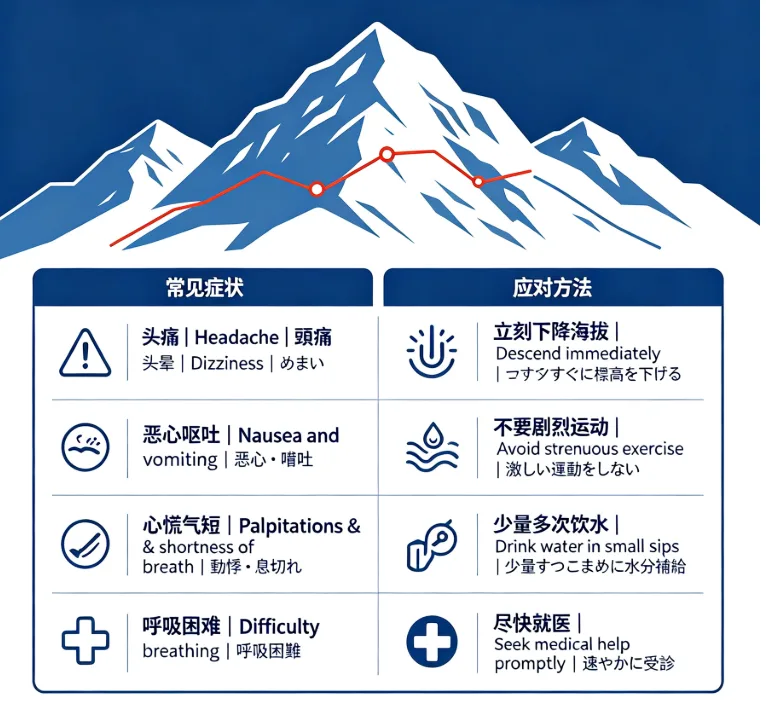
People in Hong Kong and Taiwan usually call it "mountain sickness"; medically it's Acute Mountain Sickness. The principle is actually pretty simple—like a water supply system (the higher you go, the weaker the pressure): the higher the altitude, the thinner the air, and the less oxygen each breath can "pump in." Around 3000 meters, the partial pressure of the oxygen you breathe is only about 70% of what it is at sea level—your body's system can't keep up right away, so it starts raising the alarm: headache, nausea, fatigue, can't sleep.
At first I assumed people who run a lot would hold up better. After looking into it, I found that's not the case: no matter how good your cardio is, it can't conjure extra oxygen molecules into your blood out of thin air. This is a pure physics problem—willpower or physical fitness can't solve it. Your body needs time to adapt to the low-oxygen environment; the adaptation usually takes several days, and everyone reacts differently.
Keep that in mind, because every judgment below revolves around one single thing: how much time you're giving your body.
Risk rating table: where these places actually differ
| Destination | Elevation range | Core risk | Getting around | Have I visited? |
| Jiuzhaigou | Valley entrance around 2000m; main sightseeing area 2200‑3100m | Overall elevation is low; most people won't feel any discomfort | Sightseeing shuttle the whole way | Yes |
| Huanglong | Scenic area spans 1700‑5588m, with the core attraction Five-Color Pond at 3576m | Cable car reaches high altitude in a short time—extremely rapid ascent | Cable car + boardwalk | Yes |
| Siguniang Mountain · Shuangqiao Valley | Valley entrance 2900m; far end 3840m | Shuttle the whole way; very low physical effort | Sightseeing shuttle | Yes |
| Siguniang Mountain · Changping Valley / Haizi Valley | 3100‑5484m | Mostly hiking, with large elevation gain | Hiking / horse riding | YES |
| Daocheng Yading | Yading Village 3900m; Luorong Pasture 4100‑4200m; Milk Lake 4600m | Highest overall elevation, with intense hiking | Sightseeing shuttle + long-distance hiking | No |
I want to single out Huanglong on this trip: the elevation at its main scenic spot isn't the highest on this list, but there's something that really stands out: you can reach areas above about 3,500 meters in next to no time, with almost no chance for your body to adjust gradually. I took that cable car myself, and for those first few minutes after stepping out, I could clearly feel my heart rate shoot up. That's not me exaggerating—it was my body toughing out a sudden altitude jump.
What really determines altitude sickness are these three variables—not the altitude number.
If this article leaves you with just one sentence to remember: Two people can both "have been to 3,900 meters," and the experience can be night and day—because what determines risk has never been the altitude itself.
Variable 1: ascent speed. Going from the Chengdu Plain (about 500 m) straight up to near Huanglong's Five-Color Pond by cable car, versus taking two days to gradually climb to the same elevation, puts a completely different shock on the body. The international recommendation is: above 3,000 meters, don't increase your sleeping altitude by more than 500 meters per day, and schedule a rest day for roughly every 1,000 meters gained (CDC Yellow Book, 2026). Huanglong's cable car essentially compresses several days of climbing into a few dozen minutes, so the risk is naturally higher.
Variable 2: riding vs. hiking. In Shuangqiao Valley I took the sightseeing bus the whole way and barely used any energy; in Changping Valley and Haizi Valley, you have to climb up on foot. Physical activity increases your body's demand for oxygen, which can make altitude symptoms worse when oxygen is already limited. Sustained, long-distance uphill exercise at high altitude obviously puts far more strain on the body than sightseeing by bus. So at the same elevation, hiking routes usually test your body much more than pure sightseeing.
Variable 3: length of stay. A one-day trip (up and down the same day) gives your body almost zero time to adapt. On my Dawagengzha trip, I deliberately booked a hotel at around 2,700 meters up the mountainside for the night, and only made the summit push to 3,900 meters in the early morning the next day—that arrangement itself was a buffer window for my body. International data backs this up: staying one night at moderate altitude (around 2,500–2,750 meters) first noticeably lowers the incidence of altitude illness (CDC Yellow Book, 2026).
Not recommended / needs extra caution
- People with heart disease or other underlying heart or lung conditions are high-risk for altitude illness. Talk to your doctor before you go and follow their medical advice. In places like Daocheng Yading, Changpinggou, and Haizigou, the combination of high altitude plus strenuous hiking stacks the risks — don't head out there with a “let's see how it goes” attitude. Reference: https://www.ncbi.nlm.nih.gov/books/NBK430716/
- People who've had severe altitude sickness before. If you've previously dealt with serious symptoms like intense headaches, vomiting, or trouble sleeping at altitude, going back up high means a higher chance of it happening again. Be honest with yourself about your tolerance before you set off.
Who it's a better fit for
- Want a relaxed trip with little to no hiking Go for Jiuzhaigou, Huanglong, or Shuangqiaogou in Mount Siguniang first. These three spots have solid transport options — sightseeing buses and cable cars — so you can get around without covering long distances on foot and still have a comfortable, enjoyable visit.
- Want to go to Yading but not on a long, intense hike Skip the long trail up to Milk Lake and Five Color Lake. Just explore the spots the shuttle drops you right at, like Yading Village and Chonggu Temple, and stick to the easier short route.
- Have high-altitude hiking experience and decent fitness You can take on the routes that combine altitude with serious physical effort: the long Milk Lake / Five Color Lake trail in Daocheng Yading, and Changpinggou or Haizigou in Mount Siguniang.
Key advice for your trip
- Pick a route that fits your limits: choose your stops based on your own physical condition, and actively avoid any itinerary that your body isn't up for. No matter how stunning the scenery, don't gamble your health for it.
- Make the most of the scenic area’s transport: hop on the sightseeing bus and cable car whenever you can. It saves your strength, and it also reduces your body’s oxygen demand—lowering your chances of altitude sickness.
- Medical resources are limited at high altitudes. If you start feeling clearly unwell, make getting down to a lower elevation your top priority—don’t tough it out.
- Even if you’ve done high-altitude trips before, still take the rate of elevation gain seriously. Give your body time to adapt, don’t burn yourself out, and if you feel unwell, get down promptly.
Don’t make it out to be scarier than it is—these scenic areas are already well managed.
You’re only visiting these scenic areas, not climbing Mount Everest. Developed parks aren’t some out-of-the-way wilderness trail.
One thing that's easy to overlook is how developed these scenic areas are.You're rarely far from hot water, snacks, rest stops, or other basic facilities. and simple meal stops—in mature spots like Jiuzhaigou, Huanglong, and Shuangqiaogou, you’re never far from one. It’s not the kind of wilderness where there’s nothing for miles. Plus, management is now pretty standardized: when the weather turns bad, they usually cap visitor numbers or close off parts of the area. But mountain weather and road conditions can change quickly, so you still can’t treat park management as an absolute safety guarantee.
So this guide isn’t meant to make you feel like some crisis is looming—it’s to help you clear away the things you can prevent ahead of time. What’s actually worth paying attention to isn’t usually “will I run into a wilderness-survival emergency?”—the park management already keeps those extreme scenarios out—but these easily overlooked small things:
Don’t catch a cold. A cold adds insult to injury when your respiratory system is already under strain, and combined with the low oxygen, symptoms end up much worse than they’d be at lower altitude. Bring some cold medicine, and don’t stay up late or get chilled before you leave.
Staying warm means guarding against both wind and sweat—it’s not as simple as “putting on one more layer.”
Pitfalls to avoid
Rain ponchos and shoe covers hawked on group tour buses are usually terrible quality. I ran into this myself on the Dawa Gengza trip—the vendor on the bus was selling these so-called “professional” rain ponchos and shoe covers before we went up the mountain. They weren’t cheap, the material was flimsy, and once the mountain rain hit, they didn’t last long at all. The shoe covers on my feet wore through after a few hundred meters. My advice: buy your own in downtown Chengdu or online before you head out. The difference is only a few dozen yuan, and you get something that actually holds up.
Don't buy those so-called "anti-altitude-sickness" herbal supplements. The first time I traveled to a high-altitude area, I almost got talked into buying some—a hardcore backpacker in our group talked me out of it. Later I did my own research and asked a doctor, and neither recommended it. The reason is that most of these products only carry the domestic health-food label (what people call the "little blue hat").
As shown
, not a drug approval number — this distinction is key: every year, several thousand new health foods hit the Chinese market, and the overwhelming majority have never gone through rigorous clinical testing in humans. The so-called "anti-altitude-sickness" effect basically stays at the level of marketing talk; it can't replace real medicine. If you do need medication for prevention, get a doctor to prescribe it before you set off, rather than grabbing a box of "Tibetan altitude pills" at a scenic-area entrance or online — that's basically a stupid tax.
High-altitude packing list for western and northern Sichuan to guard against altitude sickness
Protection and warmth (the absolute must-haves at altitude)
| Item | Importance | Purpose | Notes |
| Quick-dry base layer (not cotton) | ★★★★★ | Wicks sweat fast to avoid getting chilled in wet clothes | Cotton goes cold and clammy when you sweat |
| Warm hat | ★★★★★ | Big day-night temperature swings at altitude; keeps your head warm | Especially important in windy weather |
| Quality raincoat + shoe covers | ★★★★★ | For sudden mountain downpours | Don't buy the cheap ones hawked on tour buses |
| Windproof jacket / hardshell | ★★★★☆ | Blocks the strong mountain wind | It's windy up there and wind chill can drop fast |
| Emergency blanket | ★★★★☆ | For sudden hypothermia emergencies; small and light | Strongly recommended for hiking routes; optional for sightseeing |
| Heat packs | ★★★★☆ | Spot-warming for hands, feet, and torso | Don't apply directly to skin |
Medication & Health (Core: Altitude Sickness & Emergencies)
| Item | Importance | Purpose | Notes |
| Everyday cold medicine | ★★★★★ | Prevent and treat colds | A cold makes high-altitude travel much more uncomfortable |
| Medication for pre-existing conditions | ★★★★★ | Daily meds for heart disease, chronic conditions, etc. | Make sure you pack enough of it |
| Ibuprofen | ★★★★☆ | Relieves headaches and other pain | Only treats symptoms — cannot prevent altitude sickness |
| Acetazolamide (prescription) | ★★★☆☆ | Preventive medication for altitude sickness | Requires a doctor's guidance — don't just buy it online and take it on your own |
Note: If you already have a cold, fever, or are clearly feeling off before you leave, I wouldn't recommend gritting your teeth and heading to high altitude just so you don't "waste the trip."
As for meds, just bring what you normally take—there's no need to stock up for so-called "high-altitude travel."
Other:
| Item | Importance | Purpose | Notes |
| Insulated bottle | ★★★★☆ | Handy for having hot water whenever you need it | Especially handy when it's cold on the plateau |
| Sunglasses | ★★★☆☆ | Cuts down on strong glare | More essential in autumn/winter and for high-altitude hikes |
| High-SPF sunscreen, lip balm | ★★★☆☆ | Prevents sunburn and chapped lips | Strong UV rays and dry air on the plateau |
| Trekking poles | ★★★☆☆ | Saves energy on long hikes and protects your knees | Not needed for pure sightseeing |
| A few snacks and sweets | ★★★☆☆ | Quick energy boost when you're running low | Chocolate, beef jerky, etc. |
| Portable oxygen | ★★★☆☆ | Can be used as an emergency item on some high-altitude trips |
About the data
This is a decision-analysis piece put together from public records and my own on-the-ground judgment — not a step-by-step account of personally verified experiences.
If you spot discrepancies in the tables, or you've been there yourself and saw things differently, feel free to reach out 📮: [email protected] — that's how I keep this article current. Once I make it out to Daocheng Yading myself, I'll come back and fill in the first-hand data.